264MC-Reflection

My role in this film was to be the Producer alongside Chloë, which is one of the biggest roles in the film industry. ‘A producers job demands hard work over intense periods of time (Kellison, Morrow and Morrow, 2013). ‘The producer is generally in charge of the project’ (Kellison, Morrow and Morrow, 2013) so it meant that we had to be involved in every aspect of the project and to oversee, organise, plan and make big decisions.

Producers ‘organise shooting schedules – dependent on the type of producer role and availability of support staff’ (“Television/Film/Video Producer Job Profile | Prospects.Ac.Uk”). The first thing that I started off doing was the Scheduling and find out the availabilities of everyone. What I did was create a table with everyone’s name with the dates on it. The idea was that everyone put down what days of the week people were working or had anything else going on. Neel was the busiest during the week as he worked 4 times during the week whereas Chloe, Reginald and Maria worked weekend. The idea was to try and see what days everyone would be free so we could scout locations and film on those day, which was Tuesday and Wednesday. Furthermore, I created a calendar to see if anyone was going to be busy in the months of March and February. From 24th till 26th February our cinematographer Misal went Rotterdam. This meant that we moved the shooting day to 28th February till 2nd March as that was the day all the actors and crew were free. Scheduling was vital since it made us more organised, it allowed us to set ourselves deadlines with things and gave us a clearer perspective of the time we had to work around certain things.

One of the challenges that we faced was finding the actors that we needed for the film which included two middle aged actors, which we thought was going to be difficult as they would have likely demanded money which we couldn’t afford. When advertising the casting call we made it clear that it was a student film and that we didn’t have a big budget but we were going to pay for their travel. We wanted to simplify the film as well and the original script had 3 other extras. We asked the scriptwriter to minimise the characters so that the film would cost less and it would save us more space in the car. After posting the casting call on ‘Actors UK’ we got over 10 responses. We asked the actors to come to our audition on 3/2/2017 which only one actor showed up to which was then followed by 2 self-tapes. We felt that it wasn’t enough and created a new casting call and organised another audition on 10/2/2017. We had 2 people turn up to this audition and got two more self tapes. This gave us the option 7 actors for 3 characters. However, we only had 2 options for the character Sean and we weren’t too keen to have either of them. We then went out of our way to find another Actor for him who we were very pleased with. The reason we found problems with the auditioning process was that I feel the actors who are coming from far places don’t feel comfortable turning up for an audition for a film their not getting paid for. Our mistake was that we had high expectation from the number of replies that we received. Next time when we cant pay actors we should probably ask for self tapes as it’s more convenient for the actors.

Producers must know the specific target audience for each of their pictures (Lee, 2016) which should be considered during the pre-production. For example, during the pre production it was relevant when raising money as we created a crowd funding campaign and shared it on many LGBT groups and blogs. Me and Chloe identified this target audience because the story was about two homosexuals, henceforth it would relate to LGBT groups more and they would be more inclined to donate.

‘The budgeting process has a number of important internal and external purposes. It sets the framework for all the decisions regarding the film’ (“An Overview Of The Film Budget | Filmmakeriq.Com”).Therefore, as producers, me and Chloe had to be at the centre of this and plan find a way to obtain the necessary money in a short period of time.My initial proposal was to get every one in the group to donate £20 each so that we could have a £200 budget. However I later discovered that it wouldn’t be enough for our film. Having seen the success another group was having with indiegogo we decided that we would use that site to raise money for our film. We ended up raising $220 with deductions and inflation bringing it down £140. As this still wasn’t enough for our budget we then had everyone donate an additional £46 for the airbnb. This meant that we had a total budget of £800. This was split between petrol, food, travel, airbnb and props.

As the producer ‘arranges the financing and manages the production team’ (“The Roles Of The Film Production Team”) Chloe and me were also in charge of finding a composer. With the music we initially wanted to have music similar in the ilk of Quentin Tarantino movies e.g. The Doors – L.A. WomanOne, “Breakfast in America” and The Lively Ones – “Surf Rider” as inspirations for the sound we were aiming for. In this project we had a slight conundrum since finding a composer was caused a few complication. We spoke to two composers who seemed eager to work with us. However, they later told us that they’re part of a different group now. As we all individually took down details I contacted one as soon as we received the news. We had a composer who agreed to work with us. However, we were due to have a meeting with her and she didn’t turn up and told us she cant work with us because her lecturer has put her with a different group. This meant that had to quickly find another composer quickly which Reginald eventually did.

Overall, this has been a very enjoyable project to work in. The production went very well since everyone in the group had a perfect attitude and work ethic. One important aspect that I learnt in the production phase was that a group works best when ever

Bibliography

Kellison, Cathrine, Dustin Morrow, and Kacey Morrow. Producing For TV And New Media. 1st ed. Hoboken: Taylor and Francis, 2013. Print.

Lee, John J. Producer’s Business Handbook. 1st ed. [Place of publication not identified]: Focal, 2015. Print.

“An Overview Of The Film Budget | Filmmakeriq.Com”. Filmmakeriq.com. N.p., 2017. Web. 27 Mar. 2017.

“The Roles Of The Film Production Team”. Centerdigitaled.com. N.p., 2017. Web. 27 Mar. 2017.M

“Television/Film/Video Producer Job Profile | Prospects.Ac.Uk”. Prospects.ac.uk. N.p., 2017. Web. 27 Mar. 2017.

264MC-Lights Out

Films take the audience to a different world and it’s easy for us to forget the arduous tasks and time it takes to make them. ‘Lights Out’ however is a unique example of a hugely successful short film, which took little time and money to make. Lights Out Short is a 3-minute short Horror Movie Produced by David F. Sandberg and Lotta Losten which is about a women who is about to go to sleep turns the light off. When it’s off she sees the silhouette of women in the dark and when she switches it back on is gone. She keeps turning it on and off and it suddenly appears in front of her. The silhouette woman continues to haunt her as the lady is in the bed and the film ends with haunter appearing as a monster and switches the light off.

There are three Stages To Every Project – Pre-Production, Production and Post-Production(Camp). The pre-production is where the creators of the film start thinking about how they’re going to make the film after creating the concept and story. This process involves mostly the script writer who creates the story. In Lights Out the person who created the idea was the producer and director David F. Sandberg. I feel that he did a great job in coming up with this concept as it’s creative and very effective yet very simple. Moreover, the film did a good job ‘exploiting our fear of the dark’ (Chang). This consequently, created a strong visceral impact on the audience.

Sandberg revealed that he only used ‘Blackmagic cinema camera with Tokina 11-16 lens. Zoom H4n with Rode Ntg1 mic. A paper lantern from Ikea. A 375w photo bulb. A Chinese knockoff redhead light from eBay. A Manfrotto tripod. A home made dolly with PVC pipe, a piece of shelving from Ikea and skate wheels’ (“What Makes A Movie Scary?- Now You See It • R/Horror”) .

One of the most fundamental aspects of filmmaking is having a budget to make the film come to life. In order to create this the producers will need to raise money. After raising the money they have to work with the director and production designer to consider what needs to paid for and what needs to be bought or rented for the film, which is followed by a budget list. The producers have to pay expenses such as props transport, food etc. In the case of ‘Lights Out’ it’s considered a ‘no budget film’ as David F. Sandberg revealed that “It cost zero dollars” to make

(“‘Lights Out’: The Horror Short That Could”) . Furthermore, ‘the couple amused themselves by making short horror movies at home’(“‘Lights Out’: A Scary Swedish Short Spawns A Summer Hit”) so filming in one location made the filming process easier.

Sandberg came from an animation background(“‘Lights Out’: The Horror Short That Could”) which he put into use. For example the shot where we see the monster, Sandberg used his wife’s face but digitally altered it to make it look like a monster(“Lights Out (Making Of) [HD]”). Here he could have done this using make up however it would have cost more money to buy the tools to create a realistic face to scare the audience. Furthermore, he already had a skill which he put to use to create a realistic and scary face for the monster.

In addition to that, finding actors is another vital process. In the case of lights out, the only actress was one of the producers of the film Lotta Losten. This eliminated what could be considered a daunting process of finding and auditioning an actor as it can cost a lot of money. In this case of this film the acting was free and producers should try and cut the cost of the film if necessary.

The emergence of digital media outlets such as YouTube, Vimeo has opened up a lot of opportunities for independent filmmakers now and ‘Lights out’ is a perfect example of this. They entered Lights Out in a contest sponsored by the horror site Bloody Disgusting. It did not win. A couple of months after the contest, it suddenly blew up online (“‘Lights Out’: A Scary Swedish Short Spawns A Summer Hit”). Film festivals are a great way for filmmakers to showcase their work and it does give the film more publicity. However, in the case of Light Out most of the success came from the views they got from online. Sandberg said ‘Before, the film had maybe a 1,000 views, and then suddenly we were sitting in front of the computer refreshing the page to see the moment when it got to over a million’, this was then followed by emails from people in Hollywood—agents, managers, producers, and studios (“‘Lights Out’: The Horror Short That Could”). In addition to that, the film saw even more success since it got adapted into a feature film with a budget of $5million

I believe that this film is great in it’s simplicity with 1 location, actor. Also, the timing of the film was perfect, it didn’t over stay it’s welcome and got straight to the point, which in effect gave the audience an experience to remember. I feel that an important element of horrors is to maintain suspense and it could easily fade away over time, therefore timing is key in horror. The rise of Sandberg is also inspiring and proves just how easy it is to gain recognition and make it in Hollywood. The concept was very creative, but the online platform gave him the views and was essentially what brought the success. For filmmakers including myself digital media although competitive should give us optimism because now more then ever the opportunities are endless.

Bibliography

“What Makes A Movie Scary?- Now You See It • R/Horror”. reddit. N.p., 2017. Web. 27 Mar. 2017.

“‘Lights Out’: A Scary Swedish Short Spawns A Summer Hit”. NPR.org. N.p., 2017. Web. 27 Mar. 2017.

“Lights Out (Making Of) [HD]”. YouTube. N.p., 2017. Web. 27 Mar. 2017.

Your Bibliography: “‘Lights Out’: The Horror Short That Could”. Creators. N.p., 2017. Web. 27 Mar. 2017.

Chang, Justin. “The Fresh Horror Film ‘Lights Out’ Feeds On Audience’s Fear Of The Dark”. latimes.com. N.p., 2017. Web. 27 Mar. 2017.

Camp, Nigel. “Pre-Production, Production And Post-Production Stages”. The Video Effect. N.p., 2017. Web. 28 Mar. 2017.

260mc: Portfolio

Task 2 Making a relationship

Making a relationship | Cheese string from Mohammed Osman on Vimeo.

The idea and development of the scene for me was to make a short comedy skit with 6 different shots showing a relationship between the two characters in my video. Before making this I learnt some aspects about blocking ‘determining where the actors will be on the set and the first camera position’ (Pasquine, F. (2009) basic rules of filmmaking which in the case was the 180 degree rule. For this I didn’t need to put that much emphasis on the relationship between the two characters since the story does the job it’s self which is one character buying cheese strings from another in a shady location.

screen-shot-2016-12-05-at-12-51-35-amscreen-shot-2016-12-05-at-12-52-37-am

One of the techniques that I used for this task 2 making a relationship, was the rule of thirds. The purpose of this rule is to place major points of interest in the scene on any four intersections (Brown, B. (2011). The two images that I have embedded above show points in the video where I used rule of thirds to highlight the importance of the characters while also trying to show the background.

In addition to that, the 180 degree rule was a vital aspect this video in terms of blocking since it would create confusion for the audience if I didn’t use. For example if I was to change the position of my camera from one side to another it appear that the two characters changed position or that the location is different. Therefore I learnt the importance of the rule when it comes to blocking. It also made the map of the scene simpler for me since I knew I had to be on one side of the shot the whole time, therefore, I knew where everything had to be after every shot.

Moreover, I also used the shot reverse shot to convey that the two characters were communicating. Other shots I also used included a close up of the exchange of the money. This along with the grimy location and the attire of the two characters establishes that there is shady business going on between the two characters. I followed this up with a shot of Reginalds’ face looking around to see if anyone is looking as he’s going through his pouch. This makes Reginald look paranoid and makes the audience wonder what it is that he is hiding. The twist to the story was that it was cheese strings in Reginalds’ pouch and it was that which Hussein was desperate to obtain.

The POV shot of Reginald looking at Hussein wanting the cheese drugs shows the emotion of the character which was desperation and impatience. Emotion is 51% important (Chang, J. (2012) therefore this shot was one the key shots in my video since it shows that this character doesn’t possess power in the scene and he is dependent on Reginald to obtain the thing he wants establishing the relationship between the two characters. Furthermore, I wanted to show this scene from the point of view of Reginalds character as it is evidenced through the introduction of his character as well as the outro of him about to enter his flat.

For this scene blocking was fundamental since it mostly relied on the positioning of the character and the 180 degree rule. I feel like this piece achieved its purpose which was to be funny and the audience who have seen it laughed. However, I feel that the sound wasn’t good since it cut a lot in the background although I wanted to use ambient sound . Some shots I also felt weren’t that good for example the second last shot of Hussein walking away it was a little bit too long. Furthermore, although the location made sense it could have been better, Perhaps it could have been in an ally way. Furthermore, the background on pretty much all of the shots were over exposed and I feel that it slightly ruins my film.

Task 3 Lighting

screen-shot-2016-12-06-at-12-56-48-am

For this task we were given the image above and were assigned to make a short video a short film putting emphasis on the lighting. Before planning the shoot my peers and I first tried to analyse the image to develop a story. When we look at this image we feel that the character is perhaps in despair, has lost something or someone or is feeling alone. Looking at the lighting we can tell that it’s day but this particular character chooses to stay in the dark which gave us the idea to make a story of him having killed his wife and is in despair because of the actions he has committed.

For this task we were more focused on the production element on how we were going to create something similar to the image above. I went to check out Nelsons home and he has a large window at his house about a meter smaller then the one in the painting. During day time I thought that it wouldn’t create the same effect as we wanted so we therefore decided to wait till night and use the 800 watt lights to create the illusion of day. Our group understood that the filming during the day would cause over exposure and it’s harder that way to manipulate the lighting, therefore this technique worked to our advantage. This technique we used is called ‘night for day’ (RMansur (2008).

On the day of the shooting we started around 9pm. We placed 2 800 watts blondes outside the window with and placed it on an angle that made it look like the light was coming from above just like the sun.

screen-shot-2016-12-08-at-3-53-41-amscreen-shot-2016-12-08-at-4-06-32-am

Because the narrative was simple and short with the character murdering his wife. To maintain interest we introduced the character using a dark silhouette and rule of thirds hiding the parts in front of him as there is a body there. Our intention with this is was that we didn’t want to reveal too much and and we also wanted to put emphasis on the darkness to create a more mysterious atmosphere. We then cut to a close up of Thais’ face with his bloody hand. Bit by bit we began to reveal more about what was going so the audience could see that he may have killed someone. The next important shot is of him looking out the window and bringing his hoodie down. Here we see the characters face and get a better view and understanding of his emotion. This shot is then followed by a long shot where we can see more of the room to build up to the part where we show the audience the body. We end the film with pan down on the body but don’t actually show because we decided that it would have a better effect if we left the audience guessing.

Overall in this video I think that we put more emphasis on the practical aspect and our creativity, I feel like we could have put more research on lighting techniques since this image and our final product is very similar to film noir in terms ‘low key lighting style: side lights and shadowy’ shots (Brown, B. (2016). Moreover, the technical aspect of this wasn’t to a standard and some mistakes are clear. For example, there was a shot where you could barely see anything since it’s too dark. Here what we should have done was to maybe increase the exposure of the camera or put more lighting in the room and edit it in post production. In addition to that the feedback that we got from the class and lecturers was that some of the shots were too dark and that sound could have enhanced it. Looking back I think we should have got sound equipment and out and recorded diegetic sound for example sounds of heavy breathing or crying.

260mc lighting from Josh Solomon on Vimeo.

Task 5 Short film

For this task we were assigned to make a short film where we would have to create an idea from the image above. My role for this production was to research the themes of the idea and to oversee the shoot. At the beginning what we took from this picture was that The lady with the shoe looked physically powerful, enraged, modern and scandalous. One other interpretation we took from her was that judging by her hairstyle and attire she looks independent and self made which gave us the idea that the character worked her way up the ladder. The lady on the floor laughing made us think that she’s maybe arrogant, Confident, manipulative, petty and spoilt. These interpretations gave us ideas in developing the characters Naomi(the main character) and Michelle.

To get a better idea of the story before we developed our script I research the theme of our initial idea which led us to female representation and feminism. Historically women have been represented as ‘unintelligent, or sexy, or as housewives responsible only for housework (Lumby, C. (1997). When thinking about our characters for the short film we wanted to correspond this type of stereotype with our character Michelle who is someone who obeys this stereotype and believes it.

This image fits the topic of the 2nd wave feminism which led all the way from the 60s to the 90s where sexuality and reproductive rights were dominant issues, and much of the movement’s energy was focused on passing the Equal Rights Amendment to the Constitution guaranteeing social equality regardless of sex(Rampton, M. (2015). We felt that the image was a reflection of the 2nd wave of feminism in terms of how the women looked and their style. The women standing up comes across as slightly masculine, with her sleeves showing and her muscles showing and also having broad shoulders. Moreover, Kristen McMenamy is known for her unusual and androgynous appearance which is completely opposite to conventional female stereotype. This made us think about making our protagonist about the women with the shoe, since she doesn’t conform to social ideals and eventually gains the respect of the CEO through her own hard work, whereas Michelle gets left behind in the dark because she limits herself with the conventional female roles.

One of the sources of inspiration for this them is that females have been historically underrepresented with only ’20 to 35 percent of characters’ being female between the 50s and the 70s (Gauntlett, D. (2008). Furthermore when ever women have been shown they usually play the housewife role and their roles often concerned with romance or family problems (Gauntlett, D. (2008). It has only been more frequent since 3rd wave feminism that we have seen females being represented differently with films like Silence of the lambs (1991) for example having a strong female lead. Our movie will represent the lead character Naomi as a hardworking and bright individual who can hold her own in a mans world.

In terms of the overseeing the production i couldn’t really do my job since literally everyone apart from myself and Jeremie. Furthermore, no one was communicating and people weren’t doing their jobs properly. For example, there were many shots where you could see the lighting or a camera person in the shot which meant we couldn’t use a lot of potentially good shots which made it very hard for us in the post production.

Another thing was which made this production very bad was the workload was done by mostly myself, Din and Jeremie while everyone else in the group didn’t bother either turning up to meeting or find actors and locations. It got to a point where we had so much work that we shot the film two days before the deadline which meant that we rushed it which had a negative impact on the overall production.

Overall I feel that this task had good potential since we separated the research between 4 people which gave us very good and straight forward blue print. The thing that brought us down was the fact that the teamwork was terrible since most of the people literally did nothing till the day of the shoot and didn’t know enough about the story and script.

260MC Task 5 The Film – The Meeting from Mohammed Osman on Vimeo.

Task 7 Remake

For this task i remade the one task that I felt that I could have made better which was the portrait of my friend Hussein. When making this portrait video I wanted to stick to create something natural and organic which in this case was Husseins’ genuine emotion. I staged a prank call on my friend telling his twin brother to tell him any distressing news that would get Hussein feeling either angry or sad. In this case he told him that his sister was hospitalised and I capture his reaction to hearing this news. What inspired was Richard Alvedon as I stumbled into information that he use to ‘seduce his subjects with conversation’ (Rogers (2009) and capture natural expressions. And example is a shoot he had with the Windsors and told them a story that ‘on his way to meet them, his taxi had accidentally run over a dog in the street and killed it(Rogers (2009) . He knew that they were dog lovers and caught their raw emotion. this gave me the idea to do it to Hussein. I found this style of portrait because I feel that it has more depth and I wanted to break from the traditional ‘full length poses and bright daylight studios’ (Herrmann, F. (1988) and go for something that is true and genuine because I feel that capturing real emotion makes the scene more real.

With my original portrait I felt that I did a good job with capturing Husseins natural emotion with a good method. However, there is more technical aspects that go into making a great portrait which include lighting, framing and other aspects. For my original portrait I didn’t think about any of these and the lighting was perhaps the biggest blunder in this task since ‘it’s the way you use light that often makes the difference between success and failure’ (Bavister, S. (2001) and in hindsight I could have used lighting to create a meaning.

So therefore for my remake I used lighting as a way to make my second portrait better than last one. Lighting varies considerably in colour (Bavister, S. (2001) and I wanted to use warm- orange lighting since the warmth looked better on the subjects skin. Furthermore, I used two lights which included a front light and a back light. Reason why I did this was so that you could see the subject all around as I was doing a tracking shot and I didn’t want shadows around the edges.

Moving on to the purpose of the tracking shot I wanted to do an effect on post production where parts of the subjects face is splitting by using a split screen. My intention was to give the illusion that both are different shots and make them come together slowly towards the end. What I did was cut at a certain point and speed it up while cutting another point and slowed it down so the top screen reconnect with the bottom screen and the right screen to the left. This technique was just an experiment and I wanted to make it interesting and make the audience wonder how I did it.

Overall with my remake some technical aspects weren’t that great for example the jumpy parts at the end of the video ruined the smoothness that I was going for. In addition to that, before making this I wanted to use a camera which could record at 50fps so the slow motion didn’t look jumpy, however the only camera with 50fps I could use was the GoPro and I would have been able to use the dolly for that shot. Consequently this made the slow motion obvious and affected the overall quality that I was going for. On the other hand, I put more thought into the remake in terms of the setting which the first one lacked so I feel that the remake was technically better than the first one. But, if I was to say which one was my favorite I would have to say the first one because of Husseins’ reaction, I liked the realness and the rawness of that shot. All in all, what I have learnt most about portraits throughout this entire module is the importance of emotion.

Portrait of Hussein from Mohammed Osman on Vimeo.

Task 7 Remake from Mohammed Osman on Vimeo.

Bibliography

Chang, J. (2012) Post production. Available at: http://www.masteringfilm.com/walter-murchs-simple-approach-to-the-rule-of-six/ (Accessed: 5 December 2016).

Pasquine, F. (2009) The 5 stages of blocking a scene. Available at: https://www.nyfa.edu/film-school-blog/the-5-stages-of-blocking-a-scene/ (Accessed: 5 December 2016).

Brown, B. (2016) Cinematography: Theory and practice: Image making for Cinematographers and directors. Devon, United Kingdom: Routledge.

RMansur (2008) How to shoot day for night and night for day for movie making. Available at: http://film-lighting.wonderhowto.com/how-to/shoot-day-for-night-and-night-for-day-for-movie-making-161973/ (Accessed: 8 December 2016).

Lumby, C. (1997) Bad girls: The media, sex and feminism in the ’90s. St. Leonards, NSW, Australia: Allen & Unwin.

Rampton, M. (2015) Four waves of feminism. Available at: https://www.pacificu.edu/about-us/news-events/four-waves-feminism (Accessed: 1 December 2016).

Gauntlett, D. (2008) Media, gender and identity: An introduction. New York: Taylor & Francis e-Library.

Rogers (2009) The duke and Duchess of Windsor: We are not amused. Available at: https://lisawallerrogers.com/2009/10/09/the-duke-and-duchess-of-windsor-we-are-not-amused/ (Accessed: 8 December 2016).

Herrmann, F. (1988) Portrait photography. London, United Kingdom: Haynes Publications.

Bavister, S. (2001) Lighting for portrait photography. Switzerland: RotoVision.

Task 5: Short film

45e46ddcfa6a54b1317bcbe9c6d390c6

For this task we were assigned to make a short film where we would have to create an idea from the image above. My role for this production was to research the themes of the idea and to oversee the shoot. At the beginning what we took from this picture was that The lady with the shoe looked physically powerful, enraged, modern and scandalous. One other interpretation we took from her was that judging by her hairstyle and attire she looks independent and self made which gave us the idea that the character worked her way up the ladder. The lady on the floor laughing made us think that she’s maybe arrogant, Confident, manipulative, petty and spoilt. These interpretations gave us ideas in developing the characters Naomi(the main character) and Michelle.

To get a better idea of the story before we developed our script I research the theme of our initial idea which led us to female representation and feminism. Historically women have been represented as ‘unintelligent, or sexy, or as housewives responsible only for housework (Lumby, C. (1997). When thinking about our characters for the short film we wanted to correspond this type of stereotype with our character Michelle who is someone who obeys this stereotype and believes it.

This image fits the topic of the 2nd wave feminism which led all the way from the 60s to the 90s where sexuality and reproductive rights were dominant issues, and much of the movement’s energy was focused on passing the Equal Rights Amendment to the Constitution guaranteeing social equality regardless of sex(Rampton, M. (2015). We felt that the image was a reflection of the 2nd wave of feminism in terms of how the women looked and their style. The women standing up comes across as slightly masculine, with her sleeves showing and her muscles showing and also having broad shoulders. Moreover, Kristen McMenamy is known for her unusual and androgynous appearance which is completely opposite to conventional female stereotype. This made us think about making our protagonist about the women with the shoe, since she doesn’t conform to social ideals and eventually gains the respect of the CEO through her own hard work, whereas Michelle gets left behind in the dark because she limits herself with the conventional female roles.

One of the sources of inspiration for this them is that females have been historically underrepresented with only ’20 to 35 percent of characters’ being female between the 50s and the 70s (Gauntlett, D. (2008). Furthermore when ever women have been shown they usually play the housewife role and their roles often concerned with romance or family problems (Gauntlett, D. (2008). It has only been more frequent since 3rd wave feminism that we have seen females being represented differently with films like Silence of the lambs (1991) for example having a strong female lead. Our movie will represent the lead character Naomi as a hardworking and bright individual who can hold her own in a mans world.

In terms of the overseeing the production i couldn’t really do my job since literally everyone apart from myself and Jeremie. Furthermore, no one was communicating and people weren’t doing their jobs properly. For example, there were many shots where you could see the lighting or a camera person in the shot which meant we couldn’t use a lot of potentially good shots which made it very hard for us in the post production.

Another thing was which made this production very bad was the workload was done by mostly myself, Din and Jeremie while everyone else in the group didn’t bother either turning up to meeting or find actors and locations. It got to a point where we had so much work that we shot the film two days before the deadline which meant that we rushed it which had a negative impact on the overall production.

Overall I feel that this task had good potential since we separated the research between 4 people which gave us very good and straight forward blue print. The thing that brought us down was the fact  that the teamwork was terrible since most of the people literally did nothing till the day of the shoot and didn’t know enough about the story and script.

Bibliography

Lumby, C. (1997) Bad girls: The media, sex and feminism in the ’90s. St. Leonards, NSW, Australia: Allen & Unwin.

Rampton, M. (2015) Four waves of feminism. Available at: https://www.pacificu.edu/about-us/news-events/four-waves-feminism (Accessed: 1 December 2016).

Gauntlett, D. (2008) Media, gender and identity: An introduction. New York: Taylor & Francis e-Library.

Task 7: Remake

richard-avedon-the-duke-and-duchess-of-windsor-2Screen Shot 2016-12-08 at 1.02.37 PM.png

For this task i remade the one task that I felt that I could have made better which was the portrait of my friend Hussein. When making this portrait video I wanted to stick to create something natural and organic which in this case was Husseins’ genuine emotion. I staged a prank call on my friend telling his twin brother to tell him any distressing news that would get Hussein feeling either angry or sad. In this case he told him that his sister was hospitalised and I capture his reaction to hearing this news. What inspired was Richard Alvedon as I stumbled into information that he use to ‘seduce his subjects with conversation’ (Rogers (2009) and capture natural expressions. And example is a shoot he had with the Windsors and told them a story that ‘on his way to meet them, his taxi had accidentally run over a dog in the street and killed it(Rogers (2009) . He knew that they were dog lovers and caught their raw emotion. this gave me the idea to do it to Hussein. I found this style of portrait because I feel that it has more depth and I wanted to break from the traditional ‘full length poses and bright daylight studios’ (Herrmann, F. (1988) and go for something that is true and genuine because I feel that capturing real emotion makes the scene more real. 

With my original portrait I felt that I did a good job with capturing Husseins natural emotion with a good method. However, there is more technical aspects that go into making a great portrait which include lighting, framing and other aspects. For my original portrait I didn’t think about any of these and the lighting was perhaps the biggest blunder in this task since ‘it’s the way you use light that often makes the difference between success and failure’ (Bavister, S. (2001) and in hindsight I could have used lighting to create a meaning.

So therefore for my remake I used lighting as a way to make my second portrait better than last one. Lighting varies considerably in colour (Bavister, S. (2001) and I wanted to use warm- orange lighting since the warmth looked better on the subjects skin. Furthermore, I used two lights which included a front light and a back light. Reason why I did this was so that you could see the subject all around as I was doing a tracking shot and I didn’t want shadows around the edges.

Moving on to the purpose of the tracking shot I wanted to do an effect on post production where parts of the subjects face is splitting by using a split screen. My intention was to give the illusion that both are different shots and make them come together slowly towards the end. What I did was cut at a certain point and speed it up while cutting another point and slowed it down so the top screen reconnect with the bottom screen and the right screen to the left. This technique was just an experiment and I wanted to make it interesting and make the audience wonder how I did it.

Overall with my remake some technical aspects weren’t that great for example the jumpy parts at the end of the video ruined the smoothness that I was going for. In addition to that, before making this I wanted to use a camera which could record at 50fps so the slow motion didn’t look jumpy, however the only camera with 50fps I could use was the GoPro and I would have been able to use the dolly for that shot. Consequently this made the slow motion obvious and affected the overall quality that I was going for. On the other hand, I put more thought into the remake in terms of the setting which the first one lacked so I feel that the remake was technically better than the first one. But, if I was to say which one was my favorite I would have to say the first one because of Husseins’ reaction, I liked the realness and the rawness of that shot. All in all, what I have learnt most about portraits throughout this entire module is the importance of emotion.

Bibliography

Rogers (2009) The duke and Duchess of Windsor: We are not amused. Available at: https://lisawallerrogers.com/2009/10/09/the-duke-and-duchess-of-windsor-we-are-not-amused/ (Accessed: 8 December 2016).

Herrmann, F. (1988) Portrait photography. London, United Kingdom: Haynes Publications.

Bavister, S. (2001) Lighting for portrait photography. Switzerland: RotoVision.

Portrait of Hussein from Mohammed Osman on Vimeo.

Task 7 Remake from Mohammed Osman on Vimeo.

260mc: Task 3 Lighting

Screen Shot 2016-12-06 at 12.56.48 AM.png

For this task we were given the image above and were assigned to make a short video a short film putting emphasis on the lighting. Before planning the shoot my peers and I first  tried to analyse the image to develop a story. When we look at this image we feel that the character is perhaps in despair, has lost something or someone or is feeling alone. Looking at the lighting we can tell that it’s day but this particular character chooses to stay in the dark which gave us the idea to make a story of him having killed his wife and is in despair because of the actions he has committed.

For this task we were more focused on the production element on how we were going to create something similar to the image above. I went to check out Nelsons home and he has a large window at his house about a meter smaller then the one in the painting. During day time I thought that it wouldn’t create the same effect as we wanted so we therefore decided to wait till night and use the 800 watt lights to create the illusion of day. Our group understood that the filming during the day would cause over exposure and it’s harder that way to manipulate the lighting, therefore this technique worked to our advantage. This technique we used is called ‘night for day’ (RMansur (2008).

On the day of the shooting we started around 9pm. We placed 2 800 watts blondes outside the window with and placed it on an angle that made it look like the light was coming from above just like the sun.


Screen Shot 2016-12-08 at 3.53.41 AM.pngscreen-shot-2016-12-08-at-4-06-32-am

Because the narrative was simple and short with the character murdering his wife. To maintain interest we introduced the character using a dark silhouette and rule of thirds hiding the parts in front of him as there is a body there. Our intention with this is was that we didn’t want to reveal too much and and we also wanted to put emphasis on the darkness to create a more mysterious atmosphere. We then cut to a close up of Thais’ face with his bloody hand. Bit by bit we began to reveal more about what was going so the audience could see that he may have killed someone. The next important shot is of him looking out the window and bringing his hoodie down. Here we see the characters face and get a better view and understanding of his emotion. This shot is then followed by a long shot where we can see more of the room to build up to the part where we show the audience the body. We end the film with pan down on the body but don’t actually show because we decided that it would have a better effect if we left the audience guessing.

Overall in this video I think that we put more emphasis on the practical aspect and our creativity, I feel like we could have put more research on lighting techniques since this image and our final product is very similar to film noir in terms ‘low key lighting style: side lights and shadowy’ shots (Brown, B. (2016). Moreover, the technical aspect of this wasn’t to a standard and some mistakes are clear. For example, there was a shot where you could barely see anything since it’s too dark. Here what we should have done was to maybe increase the exposure of the camera or put more lighting in the room and edit it in post production. In addition to that the feedback that we got from the class and lecturers was that some of the shots were too dark and that sound could have enhanced it. Looking back I think we should have got sound equipment and out and recorded diegetic sound for example sounds of heavy breathing or crying.

260mc lighting from Josh Solomon on Vimeo.

Bibliography

Brown, B. (2016) Cinematography: Theory and practice: Image making for Cinematographers and directors. Devon, United Kingdom: Routledge.

RMansur (2008) How to shoot day for night and night for day for movie making. Available at: http://film-lighting.wonderhowto.com/how-to/shoot-day-for-night-and-night-for-day-for-movie-making-161973/ (Accessed: 8 December 2016).

260mc: Task 2 Creating a Relationship

Making a relationship | Cheese string from Mohammed Osman on Vimeo.

The idea and development of the scene for me was to make a short comedy skit with 6 different shots showing a relationship between the two characters in my video. Before making this I learnt some aspects about blocking ‘determining where the actors will be on the set and the first camera position’ (Pasquine, F. (2009) basic rules of filmmaking which in the case was the 180 degree rule. For this I didn’t need to put that much emphasis on the relationship between the two characters since the story does the job it’s self which is one character buying cheese strings from another in a shady location.

Screen Shot 2016-12-05 at 12.51.35 AM.pngscreen-shot-2016-12-05-at-12-52-37-am

One of the techniques that I used for this task 2 making a relationship, was the rule of thirds. The purpose of this rule is to place major points of interest in the scene on any four intersections (Brown, B. (2011). The two images that I have embedded above show points in the video where I used rule of thirds to highlight the importance of the characters while also trying to show the background.

In addition to that, the 180 degree rule was a vital aspect this video in terms of blocking since it would create confusion for the audience if I didn’t use. For example if I was to change the position of my camera from one side to another it appear that the two characters changed position or that the location is different. Therefore I learnt the importance of the rule when it comes to blocking. It also made the map of the scene simpler for me since I knew I had to be on one side of the shot the whole time, therefore, I knew where everything had to be after every shot.

Moreover, I also used the shot reverse shot to convey that the two characters were communicating. Other shots I also used included a close up of the exchange of the money. This along with the grimy location and the attire of the two characters establishes that there is shady business going on between the two characters. I followed this up with a shot of Reginalds’ face looking around to see if anyone is looking as he’s going through his pouch. This makes Reginald look paranoid and makes the audience wonder what it is that he is hiding. The twist to the story was that it was cheese strings in Reginalds’ pouch and it was that which Hussein was desperate to obtain.

The POV shot of Reginald looking at Hussein wanting the cheese drugs shows the emotion of the character which was desperation and impatience. Emotion is 51% important (Chang, J. (2012) therefore this shot was one the key shots in my video since it shows that this character doesn’t possess power in the scene and he is dependent on Reginald to obtain the thing he wants establishing the relationship between the two characters. Furthermore, I wanted to show this scene from the point of view of Reginalds character as it is evidenced through the introduction of his character as well as the outro of him about to enter his flat.

For this scene blocking was fundamental since it mostly relied on the positioning of the character and the 180 degree rule. I feel like this piece achieved its purpose which was to be funny and the audience who have seen it laughed. However, I feel that the sound wasn’t good since it cut a lot in the background although I wanted to use ambient sound . Some shots I also felt weren’t that good for example the second last shot of Hussein walking away it was a little bit too long. Furthermore, although the location made sense it could have been better, Perhaps it could have been in an ally way. Furthermore, the background on pretty much all of the shots were over exposed and I feel that it slightly ruins my film.

Bibliography

Chang, J. (2012) Post production. Available at: http://www.masteringfilm.com/walter-murchs-simple-approach-to-the-rule-of-six/ (Accessed: 5 December 2016).

Brown, B. (2011) Cinematography: Theory and practice, Second edition: Image making for Cinematographers and directors. 2nd edn. Amsterdam: Elsevier/Focal Press.

Pasquine, F. (2009) The 5 stages of blocking a scene. Available at: https://www.nyfa.edu/film-school-blog/the-5-stages-of-blocking-a-scene/ (Accessed: 5 December 2016).

Research

1463661099303

In terms of our documentary with Ian Cook we didn’t have to do a huge amount of research since it was more about the character and his art, juxtaposed with my initial idea with my cousin, since it would have been about him and the problems he faces as a rapper in Sweden. Meaning I would have to research the music industry in Sweden in a lot of detail. Before making the documentary, Anjani asked Ian Cook some questions about his business where we discovered a story that his ex-girlfriend bought him a toy car and she told him not to get paint on it. He ended up not listening to her and started painting with cars. This helped us because it assisted with the treatment, shot list, storyboard and questions.

screen-shot-2016-11-29-at-10-33-40-am


We looked into his website as well and got an idea of his ethos. So what I have learnt is that without research on the subject the production becomes flat and not straightforward. As a filmmaker it’s important to know what message you want to put across, Susan Sontag theory suggests that an image can never be a true representation as it is just a shot of the moment and one perspective (Sontag, S. (1979) On photography. London, United Kingdom) Therefore, it gives us the artist the freedom to create a meaning.

Process and development

eisenstein

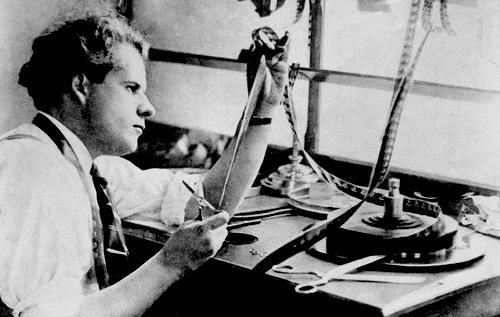
Sergei Eisenstein’s Strike has made me more aware of the power of cinema. The way he combines the shot of the people getting shot and the cow getting slaughtered creates a third meaning. This has given me inspiration to try and replicate something similar to that and to experiment. 

the-art-of-editing-6-4-638

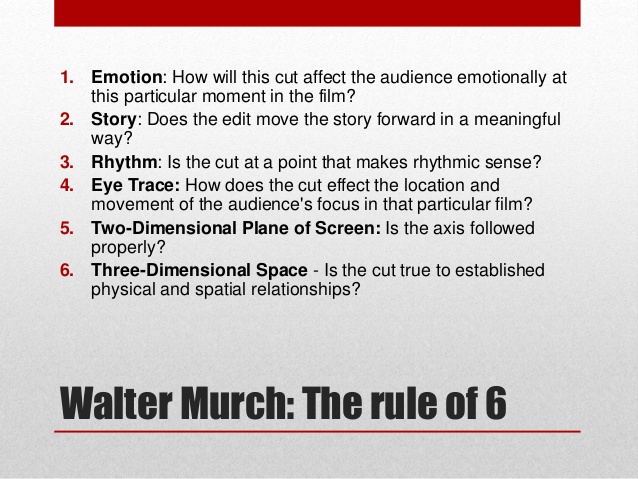
Researching editing techniques such as rule of 6 has taught me the importance of emotion. Without emotion no one will really feel the documentary, therefore during the production we did the best we could to put emphasis on that. While Ian Cook is talking about his work we planned on showing sequences of shots of his toy cars and the paint. In the final edit we wanted to add non diegetic sound of race cars at the beginning while having a panning shot of the shop to introduce the audience to his world.

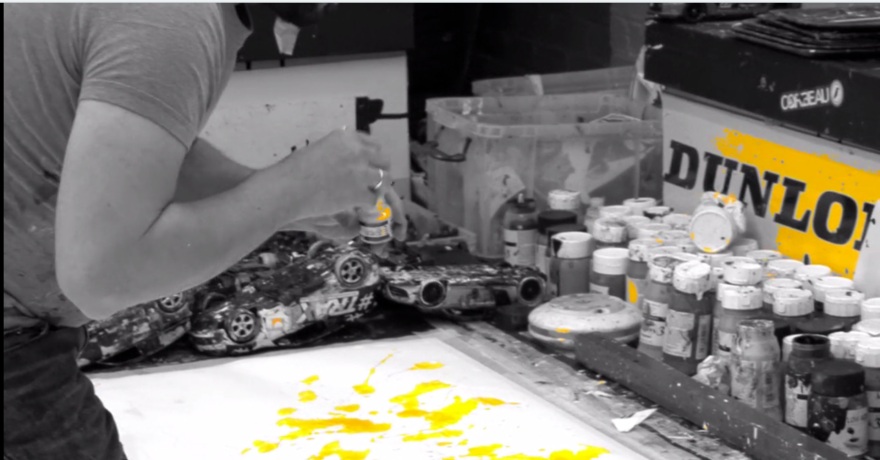
In terms of production in the shot list we included references to the painting and cars. Whilst filming we wanted to capture as much colours as we could to put emphasis on the colours of the paint he was adding. Moreover, we also did a lot of tracking and panning shots to symbolise paint strokes.

Analysis

ian-grab

The shoot differed quite a bit from what we planned but not drastically. At first we wanted a lot of stable shots but on the day of the shoot we didn’t meet that expectation which meant we didn’t have the clean shots we wanted. We also wanted to use a camera, which was 60fps so that we could capture a nice slow motion close up of Ian throwing the paint. But because we didn’t have access to that we use a Sony video camera, which didn’t come, out well in the edit so we were forced to scrap that shot. Another element we wanted to use was music which would have been made by Liam, however when we looked at the edit we felt that it worked even without music, so we added the car sounds at the beginning.

ian-grab2

Furthermore, we wanted a certain style and flow with the editing so we used a lot of panning shots to convey paint strokes. We also wanted to progressively add colour bit by bit to create a journey of the painting in our piece. Moreover we got the balance of close ups and longs shot that we wanted since our strategy was to take out 3 cameras and where one capture close ups of the shop while the capture long/mid shots. The third one was used to film Ian Cook while he was painting.

Evaluation

carpainting

Overall I feel that this production was decent but there could have been a lot of improvements considering what I have learnt in terms of the theory aspect, which I feel we could have put more into practice.

However, although we didn’t meet a lot as a group, with all the meetings we had, everything was established clear enough therefore the preparations and the date for the shoot was clearly established. In addition to that, when we got into gear although there wasn’t a lot of passion during the production, we showed a good level of commitment as a team. We assigned ourselves with different roles and stuck to them to a decent standard and eventually got a lot of different variety of shots. With the final edit I feel it visually looked good and the black and white with the highlighted colours gives it a certain feel.

However I feel that the audio and the interview were poor. I was the one who interviewed Ian Cook with the questions we had we weren’t getting good answers. I tried to ask him interesting questions that that were personal in terms of where he came from and how his passion for the art came about. However, he seemed to half-heartedly answer the questions.

Overall I feel that through out this module I have learnt a lot of invaluable information and skills about documentary production through my research of the history, theory and the general production. Researching Vertov and reading about him, I have leant about the history of montage editing and he is someone who pioneered documentary. Learning this I have learnt why shots are selected and how to combine them to create something more.

I feel like I learnt more from the information I read and to be honest I don’t think we implemented a lot of the theory into our documentary. The main things that this production lacked was passion, proper planning and team cohesion as we didn’t communicate enough until the day of the shoot. However, I feel there are positives to take from this, which was documentary that came out pretty decent with decent ideas implemented. In the future I will ensure that the next documentary will be planned better and I work on a story that I feel strongly about.

Bibliography 

https://theculturetrip.com/europe/russia/articles/sergei-eisenstein-s-montage-revolution/

Hicks, J. (no date) Dziga Vertov Defining Documentary Film.

Sontag, S. (1979) On photography. London, United Kingdom: Penguin, [1979].

http://videoandfilmmaker.com/wp/index.php/tutorials/film-editing-walter-murchs-rule-6/

http://writing.upenn.edu/library/Sontag-Susan-Photography.pdf